
How Do You Stop Merbau Leaching?
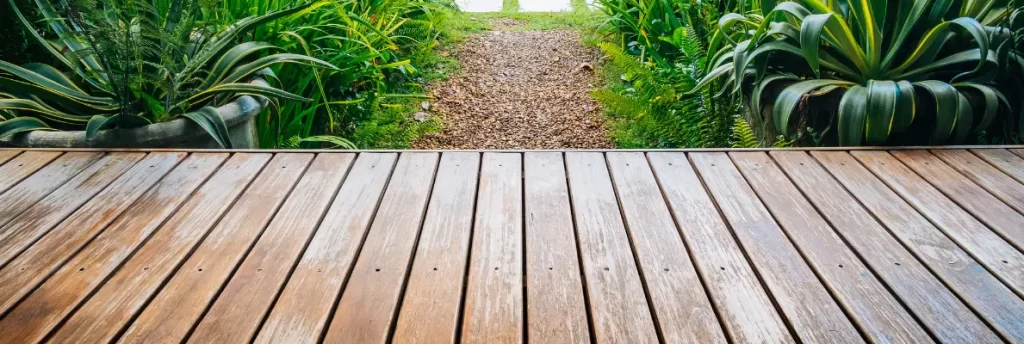
Merbau is a popular choice for outdoor structures thanks to its rich colour and durability. However, one common issue homeowners face is tannin leakage, which can stain nearby surfaces such as concrete, pavers, or tiles.
Tannin bleed occurs when moisture enters the timber—especially through freshly cut ends—causing natural extractives to seep out. This creates brown or rusty marks that can be difficult to remove if left untreated.
Although Merbau contains a higher level of tannins than most timbers, the problem can be effectively managed with the right preparation and care.
What Is Tannin Leaching?
The deep colour, strength, and natural resistance of this hardwood come from tannins present within the timber. When moisture such as rain or humidity reaches the wood fibres, these tannins can wash out and run onto nearby surfaces.
This doesn’t affect the timber’s performance but can be inconvenient for homeowners—especially during the initial installation phase.
Looking for premium Merbau Decking Melbourne? Browse our complete range of Merbau decking boards available in multiple sizes for residential and commercial projects.
How to Reduce or Prevent Tannin Bleeding
1. Pre-Treatment
Applying a tannin-blocking solution before sealing can significantly reduce bleeding. Products containing oxalic acid or specialised tannin blockers help stabilise the timber and reduce runoff during wet weather.
2. Allow a Proper Drying Period
Let the merbau decking timber dry for 2–4 weeks before installing it as screening, fencing, or decking. Store it in a dry, shaded, and ventilated area. This helps balance moisture levels within the boards and reduce early-stage leaching.
3. Seal the Timber Correctly
Use a high-quality exterior timber sealer designed for hardwoods. Proper sealing:
- Slows down moisture penetration
- Minimises tannin release
- Protects the timber from UV and weather damage
Follow the manufacturer’s instructions for first coat and reapplication intervals.
4. Maintain the Surface Regularly
Regular cleaning and periodic resealing help prevent long-term tannin issues.
Inspect your boards for signs of weathering and address any concerns early.
5. Improve Drainage & Reduce Water Retention
Standing water accelerates tannin bleed. Ensure:
- Good drainage at the base of fences or screens
- No buildup of leaves or debris
- Soil and garden beds slope away from timber surfaces
These steps prevent unnecessary moisture soaking into the boards.
6. Rinse Surrounding Surfaces
If staining occurs on driveways, pavers, or paths, hose the area regularly—especially after heavy rain. Early rinsing removes tannins before they penetrate the surface.
How to Clean Tannin Stains
Fresh tannin marks can often be removed using warm soapy water and a stiff brush.
For older or stubborn stains, an oxalic acid-based timber cleaner may be required.
To use oxalic acid:
- Dissolve 1 kg of oxalic acid in 6 litres of warm water.
- Scrub the stained area thoroughly.
- Rinse the surface well, as oxalic acid can be hazardous if left to dry.
Explore More Outdoor Products
- Composite decking
- Water features
- Bamboo fencing & panels
- Merbau DAR
- Merbau posts
- Merbau screening
- Merbau for fencing
Final Thoughts
Tannin leaching is a natural process but can be managed with correct preparation, sealing, and maintenance. By taking proactive steps, you can preserve the appearance of your outdoor surfaces and enjoy the long-lasting beauty of your timber structures.